NSHS-8181 BARSEEM
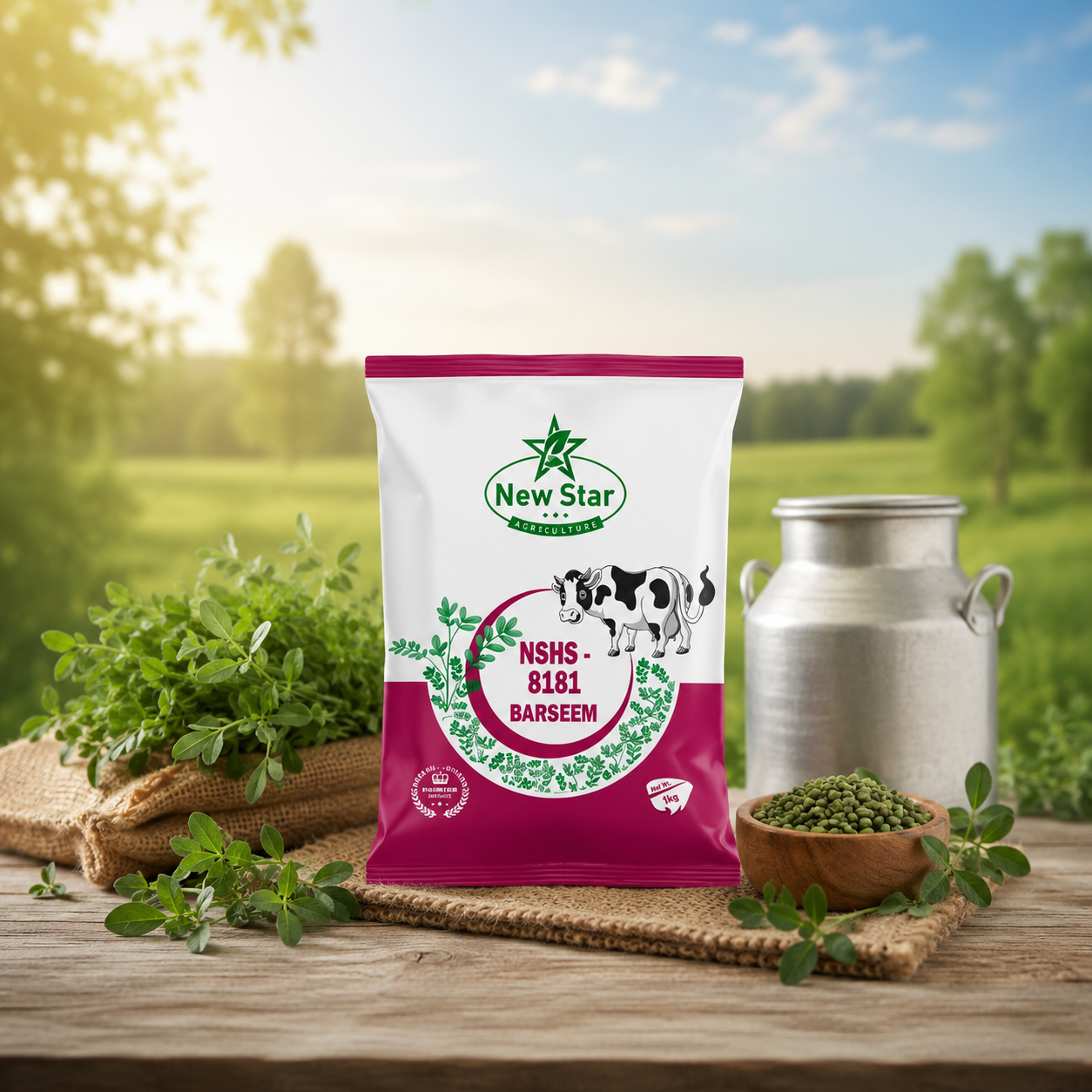
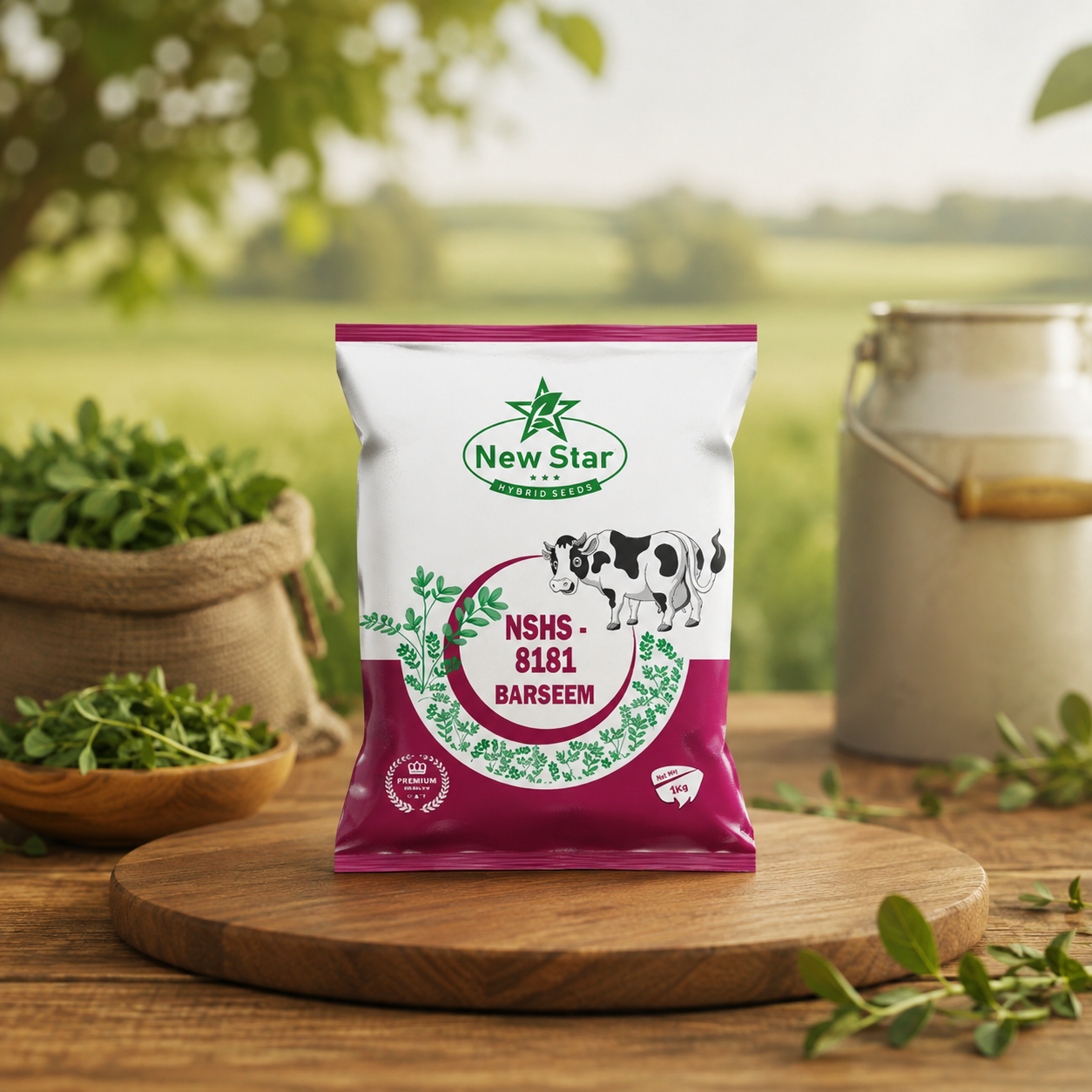
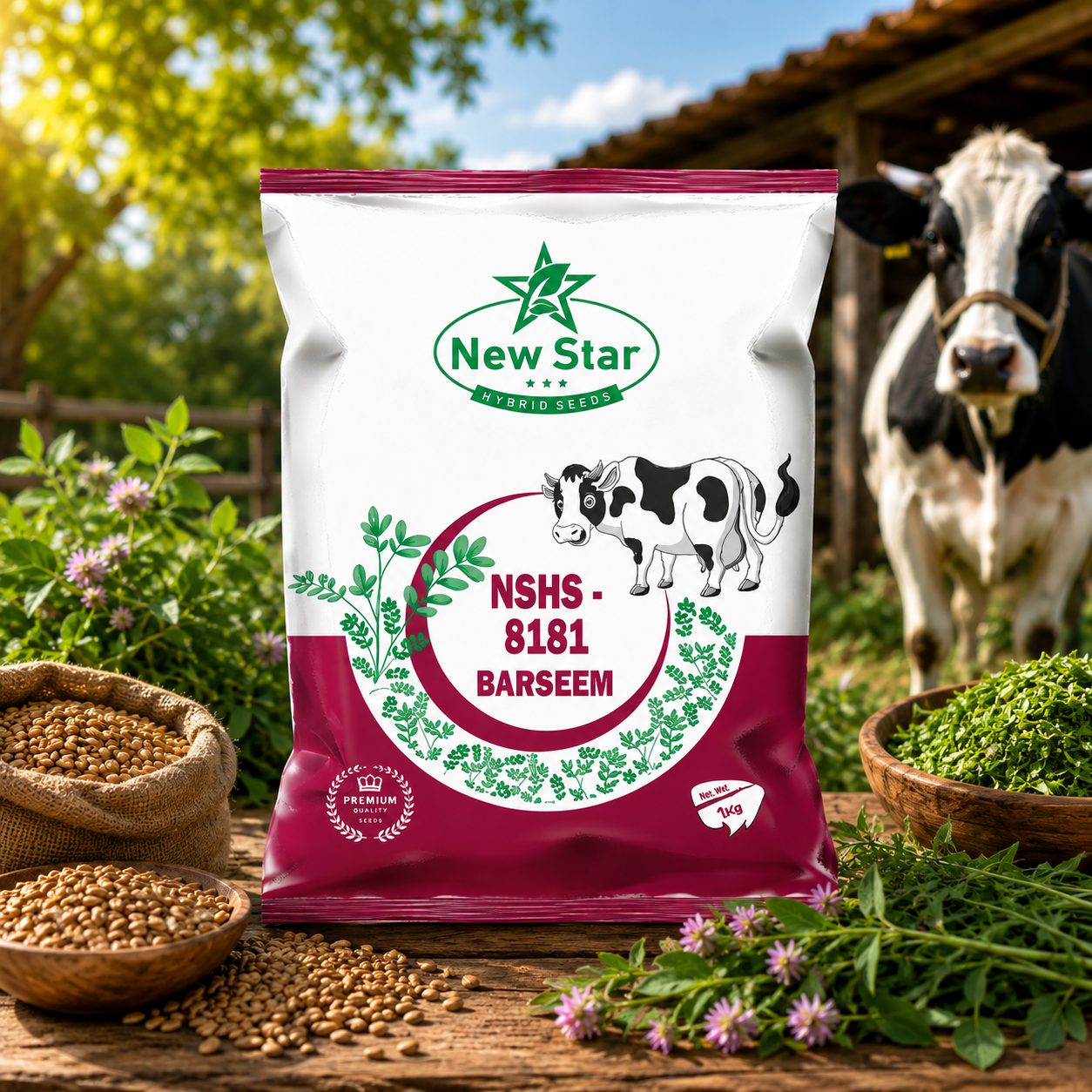
NSHS – 8181 Barseem
Premium Multi-Cut Barseem for Nutritious & High-Quality Green Fodder Produced & Marketed by NEW STAR HYBRID SEEDS
NSHS – 8181 is a high-performing multi-cut Barseem variety, well suited to the climatic conditions of North India. With fast regrowth, profuse tillering, excellent palatability, and high protein content, it provides a continuous supply of nutritious green fodder throughout the season.
Agronomy Details
- Sowing Time: September to November
- Seed Rate: 8–10 kg per acre
- First Cut: Approximately 35-40 days after sowing
- Subsequent Cuts: Approximately every 25–30 days
For Better Results
Regular and timely irrigation is essential for better regrowth, higher biomass production, and maximum number of productive cuts throughout the season.
Crop Characteristics
- Crop Type: Multi-Cut Barseem
- Cuts per Season: 5–6 cuts with proper irrigation
- Crude Protein: 17–20%
- Growth Habit: Erect with profuse tillering
- Fodder Quality: Soft, juicy, nutritious & highly palatable
- Regrowth: Fast after cutting
Why Choose NSHS – 8181?
5–6 Cuts in One Season
With proper crop management and regular irrigation, NSHS – 8181 can provide 5–6 productive fodder cuts, ensuring a prolonged green fodder supply.
Fast Regrowth After Cutting
Quick regeneration after every cut helps maintain a continuous and dependable supply of fresh green fodder.
High Protein – 17–20% Crude Protein
Protein-rich fodder makes it an excellent choice for dairy animals, supporting better nutrition, animal health, and milk productivity.
Soft, Juicy & Highly Palatable Fodder
Tender and succulent fodder encourages better feed intake and helps support improved milk production.
Erect Growth & Profuse Tillering
Strong, upright plants with abundant tillering help produce higher biomass and good green fodder yield.
Strong Field Performance
Vigorous crop growth and good regeneration provide reliable performance throughout the cutting season.
Tolerance to Mild Cold Conditions
Performs well under the cool-season conditions commonly experienced across North India.
Supports Soil Health
Being a leguminous crop, Barseem helps fix atmospheric nitrogen, contributing to improved soil fertility and benefiting subsequent crops.
NSHS – 8181 is an excellent choice for farmers looking for:
- Continuous green fodder availability
- High-protein and nutritious animal feed
- Better fodder intake and palatability
- Multiple productive cuts from a single sowing
- High biomass and reliable field performance
- Support for better milk productivity
More Cuts. More Nutrition. More Green Fodder.
NSHS – 8181 – The Multi-Cut Barseem for Better Dairy Performance.
Yield may vary depending on soil fertility, climate, irrigation, and crop management practices